The Decline of Social Storytelling
And the Rise of Broadcast Storytelling
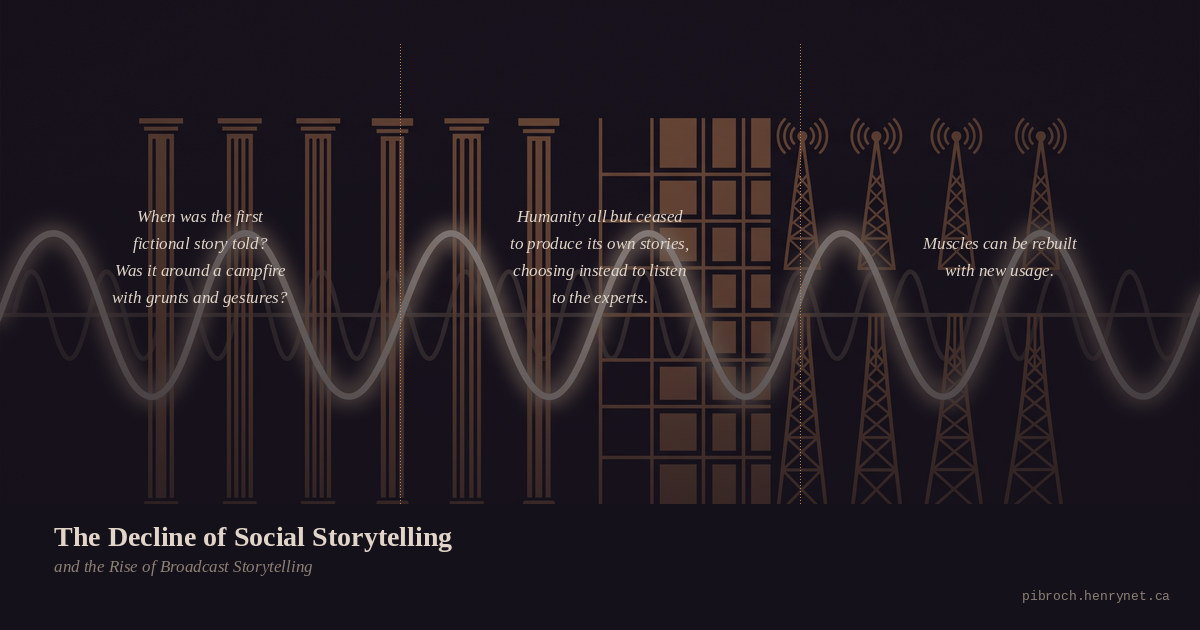
When was the first fictional story told? Was it around a campfire with grunts and gestures? Was it before that, before fire, in the trees, cajoling a peer about where the perfect banana spot really was? Likely we can never know such a thing, but what we do know is that humanity has been at this storytelling business for an incredibly long time.
The norm for humanity across the depth of time has been sharing and storytelling — across the campfire, on foot, in bed at night, while doing chores or hunting. For thousands of years humanity has been the only storytelling species on planet Earth: it is arguably the defining feature of our species.
For thousands of years you needed to be in earshot of someone to hear their message, or someone needed to have the skills to faithfully reproduce your oration. Individuals needed to hone their storytelling skills to communicate effectively and well. Every member of society relied on their ability to correctly and cogently communicate information, to discern and discover meaning and values, to live the lives of others who came before them.
When the pamphlet and broadsheet arrived, all of a sudden we had media producers and media consumers. Slowly at first, and then with a sudden flurry in the twentieth century, humanity all but ceased to produce its own stories. Humanity chose instead to listen to the stories of the experts, of the people who were "good" at storytelling. Recorded or broadcasted media — even the physical book itself — replaced local voice, and the local talent support structures withered into irrelevancy.
The medium, as Marshall McLuhan tells us, is the message itself. Humanity turned away from exercising the muscle of storytelling between each other in favour of the more polished, more eye-catching, more perfected forms of storytelling that came from the masters. Who can blame them? I'd rather watch Shakespeare than little Timmy's fireside pastiche, I'd rather read J. R. R. Tolkien than Sally's random fairy tales, I'd rather peruse the Van Gogh section of the gallery than peruse Oakridge Elementary School's Grade 6 art class' work. It's the broadcast media that delivered this to us — the theatre, the movie, the printed book.
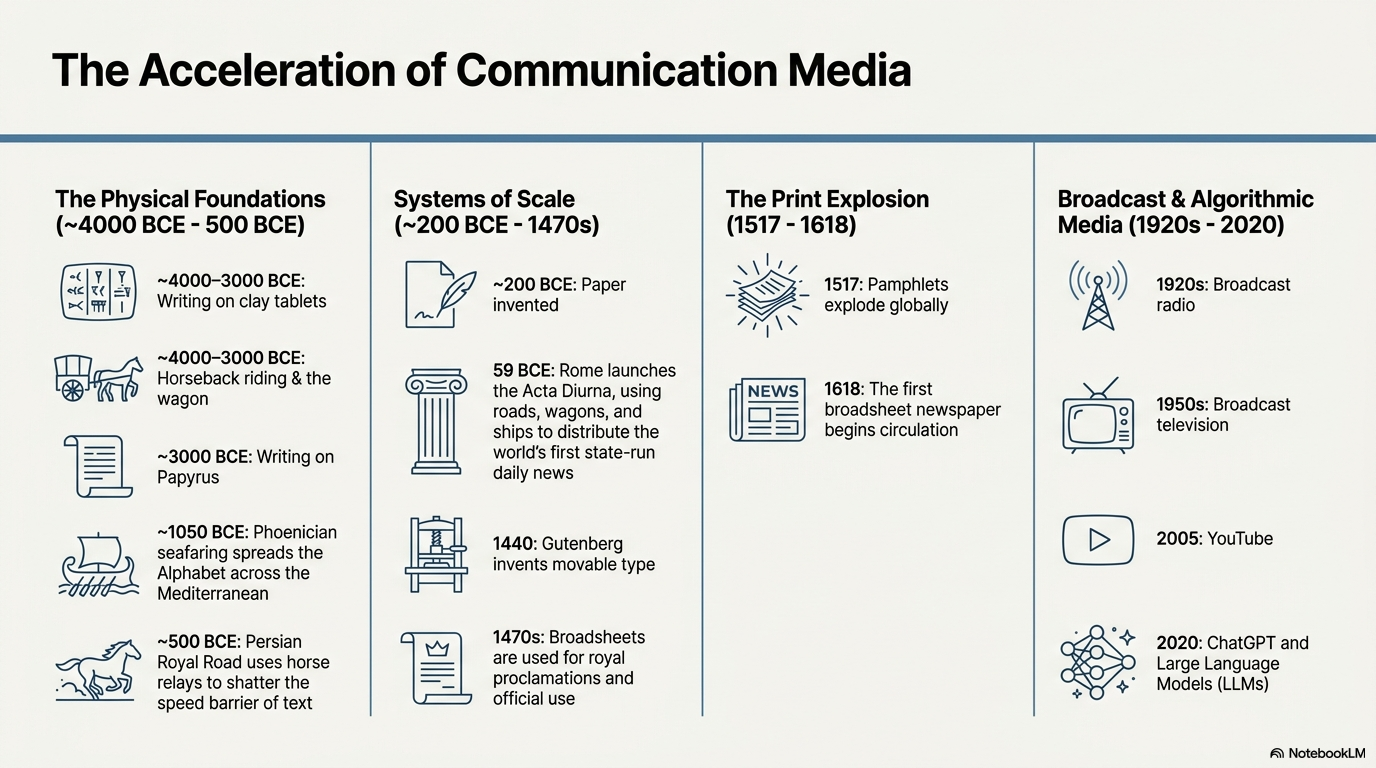
The centuries-long reliance on broadcast entertainment and engagement, beginning with the printing press, led the majority of the population to let their storytelling capabilities atrophy. The one-to-all focus of broadcast technologies began to overshadow the more intimate one-to-many, one-to-few, and one-on-one modalities of storytelling.
What came with the reliance on broadcast media was also humanity's ability to discern the good from the bad, the truthful from the deceitful, the whimsical from the serious. The calcification of the one-to-many modality let the many relax — or never even develop — good literary judgement skills: to essentially outsource that cognitive capability to the experts.
The modern calamity in digital social media is "fake news," and what skills do people need to be able to discern the truthfulness of a story? The very ability humanity needed in the past to make good decisions from good stories atrophied in favour of leaving the discerning of truth to the experts. By relying on academia, the printing press, the newspapers, radio, and television to deliver us the truth, we gave that ability to the few who made it their profession.
Humanity offloaded the ability to tell stories to each other and, at the same time, offloaded the ability to discern truth from falsehood, fact from fiction.
Muscles can be rebuilt with new usage, and stories echo throughout history.