The Indigenous and Me
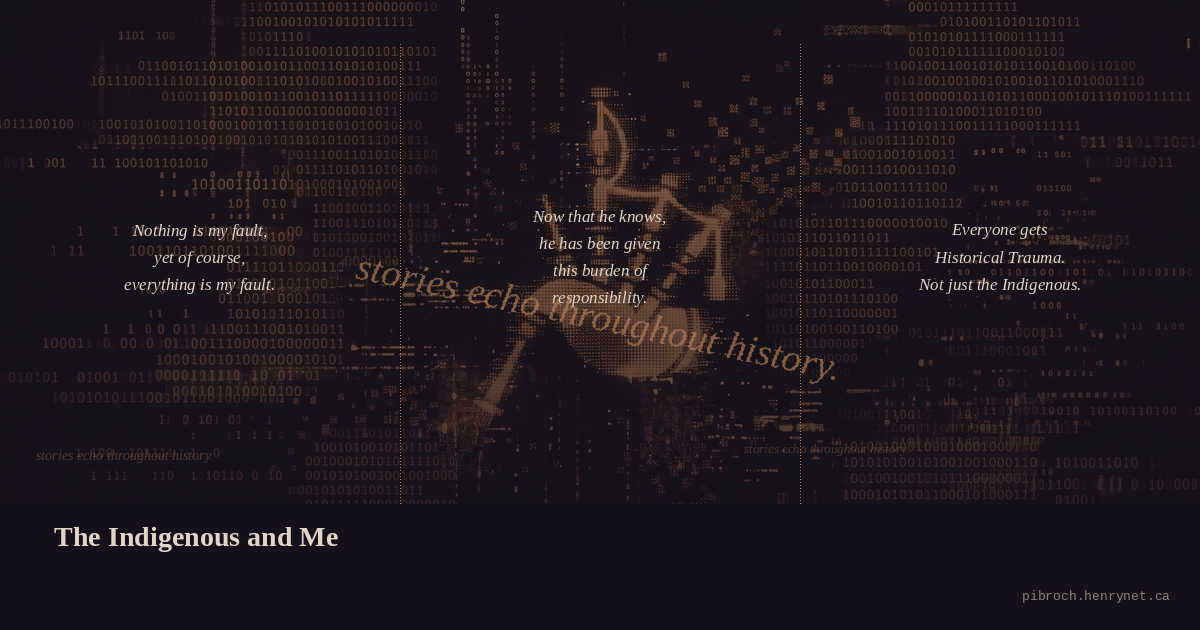
As a kid growing up in the heart of the 1980s we played Cowboys and Indians our fair share. While the Indians, even then, weren't the perennial targets and villains that they were in the 50s of my father's generation, they were still often the noble savage, the brutal killers on horseback with hatchets and muskets — a people to strike fear into law-abiding and upstanding citizens.
The first real introduction to Indigenous people that I can recall was via the words of a white man — Farley Mowat's Lost in the Barrens, a novel given to me as part of my Grade 6 education. I lived not far from several native groups, but growing up in the 80s I had no knowledge of contact with any Indigenous persons of any type. So this was it.
To be honest, reading Lost in the Barrens was a seminal moment for me. It turned me from a kid who barely cracked a comic book to one reading until the birds chirped in the morning, more nights than I can count. I procrastinated reading the book until I knew that the next day I had to have chapters 1 through 5 read — and I'd not yet started. So, late at night, past my bedtime, I started reading — and I haven't stopped since.
Safe to say, though, even while that book introduced me to the concept of Indigenous peoples living side by side as one of the two major characters, the Indigenous characters in Lost in the Barrens did not have the cultural effect on me that one might hope. For me, Farley Mowat stories echo throughout history.
My children's school board held an event with Jesse Wente, an Indigenous journalist who has travelled across the country talking to communities in the wake of the Truth and Reconciliation Commission. A major talking point I took away from Jesse's talk was how he described the way that Indigenous peoples deal with relationships with one another — that a person's place in the world was an integral part of who they are, their connection to the land and the water of where they lived an immense part of their introductions to each other. And their stories echo throughout history.
He talked on residential schools and referenced some of the horrors and the cultural and physical damage done to himself and his family members — Jesse himself growing up, just like I did, in the same era, not knowing any other Indigenous persons outside of his family in the city he grew up in, all the while surrounded by them. Jesse also talked about responsibility: that colonists could claim they didn't know, but now that we as a nation have acknowledged the Truth and committed to Reconciliation, he told us that now that we know, we bear the burden of responsibility. And their stories echo throughout history.
In the car on the way home from the Jesse Wente talk, my 11-year-old son said: "But I didn't do anything wrong. I didn't hurt them. Why am I to blame?"
That's a hard thing for a dad to hear. That's a hard thing for a 50-year-old white male to hear in this day and age. Nothing is my fault, yet of course everything is my fault — and it will be my son's fault too, if it isn't already.
I am the oppressor. I am the boogeyman, the schoolmaster, the negotiator in bad faith. I am the white man who took and took and did not give back. Here I am sitting in my comfortable chair on Turtle Island, enjoying the fruits of the land and the bounty that was taken by blood, deceit, famine, and disease. I am the inheritor of all that was done in my name, whether I asked them to do it or not. And those stories echo throughout history.
My 11-year-old son is the oppressor. He is the colonist, redelivering Historical Trauma wherever he goes simply by the fact that he exists at all.
As his father I told him that, as Jesse had also told us, now that he knows these things were done in his name — now that he knows — he has been given a burden of responsibility. Just as Indigenous peoples have been placed a burden of a different sort on their shoulders, not of their choosing, so too does he get a burden of his own.
Everyone gets Historical Trauma, not just the Indigenous. My son's trauma is that of responsibility — of understanding, of trying to bridge a gap, of trying to work towards healing wounds that he did not himself cause. But by merely existing he perpetuates it, and that story echoes throughout history.
Discussion